What Is CCUS and Why Does It Matter for India?
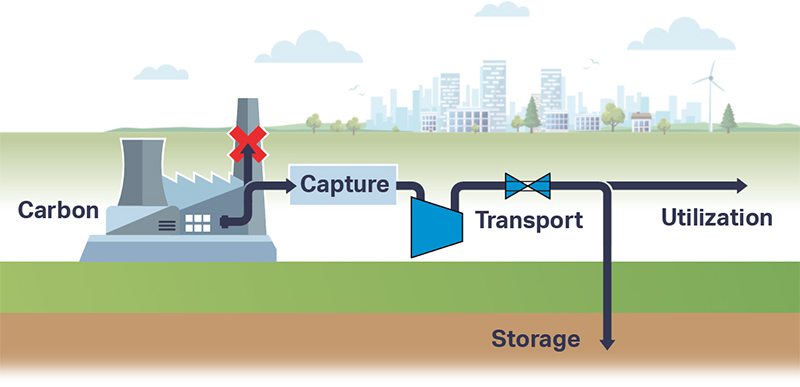
Carbon Capture, Utilization and Storage (CCUS) refers to technologies that:
- Capture CO₂ from industrial emissions (power plants, cement, steel, fertiliser plants)
- Utilise the captured CO₂ by converting it into something useful — fuels, chemicals, or materials
- Store any remaining CO₂ that cannot be economically utilised (geological sequestration)
India emits approximately 2.9 billion tonnes of CO₂ per year — the third-largest emitter globally. Reaching net zero by 2070 (India's commitment) requires not just cutting emissions from new sources, but actively removing and utilising existing emissions. CCUS is central to this.
The Electrochemical Route: Why It's Superior
There are several ways to convert CO₂ into useful products:
- Thermochemical (high-temperature, energy-intensive)
- Photochemical (light-driven, still largely experimental at scale)
- Electrochemical (electricity-driven, scalable, room-temperature operation)
The electrochemical route is Shakti Photon Solutions' focus — and for good reason. When powered by renewable electricity, electrochemical CO₂ reduction (eCO₂R) operates at room temperature, modular scale, and with a carbon-negative energy balance. It converts CO₂ and water into valuable chemicals using only electrons.
What Products Can You Make from CO₂?
1. Carbon Monoxide (CO)
Market value: ₹30–80 per Nm³
How it's made: CO₂ + 2e⁻ + 2H⁺ → CO + H₂O
Applications: Syngas feedstock (CO + H₂) for Fischer-Tropsch fuels, methanol synthesis, and specialty chemicals. CO is a high-volume industrial chemical with well-established markets.
Technology readiness: Highest — CO is the easiest eCO₂R product to make with >90% selectivity using silver or gold catalysts.
2. Formic Acid (HCOOH)
Market value: ₹60–120 per kg
How it's made: CO₂ + 2e⁻ + 2H⁺ → HCOOH
Applications: Textile industry (leather tanning), agriculture (animal feed preservative), pharmaceutical synthesis, and emerging use as a liquid hydrogen carrier (Formic Acid as H₂ storage medium).
India opportunity: India is a major importer of formic acid — domestic production via eCO₂R could address this import dependency while decarbonising industrial CO₂ sources simultaneously.
3. Ethylene (C₂H₄)
Market value: ₹80–160 per kg
How it's made: 2CO₂ + 12e⁻ + 12H⁺ → C₂H₄ + 4H₂O (using copper catalysts)
Applications: Precursor to polyethylene (the world's most widely used plastic), ethylene glycol, and dozens of industrial chemicals.
Complexity: Ethylene requires more selective catalysts and higher energy input — copper is the leading catalyst, with significant ongoing research. Shakti Photon Solutions' R&D team works on improving selectivity for ethylene in multi-carbon products.
The CCUS System Architecture
A complete electrochemical CCUS system has three subsystems:
| Subsystem | Function | Key Components |
|---|---|---|
| CO₂ Capture | Absorb CO₂ from flue gas or ambient air | Amine scrubber, solid sorbent unit, or direct air capture system |
| Electrochemical Reactor | Convert CO₂ to target chemicals using renewable electricity | Electrolyzer stack with CO₂-specific electrodes, GDE, membrane |
| Product Separation | Purify the target chemical from gas/liquid mixtures | Gas-liquid separator, distillation, compression unit |
CCUS at Different Scales
Lab Scale (0.1–1 kg CO₂/day)
Ideal for: University research groups, catalyst development, proof of concept for industry partners. Systems fit on a benchtop. We can provide lab-scale CO₂ reduction cells and MEA fabrication support.
Pilot Scale (10–100 kg CO₂/day)
Ideal for: Industry pilots, government-funded demonstration projects, startup validation. Can be co-located with an existing industrial CO₂ source (cement plant, brewery, power plant). This is where Shakti Photon Solutions is most active — helping clients design and deploy pilot-scale CCUS systems.
Industrial Scale (tonnes CO₂/day)
The long-term destination. Technology is approaching techno-economic viability at this scale — key research challenges in catalyst durability and membrane lifetime are being solved.
India's CCUS Policy Landscape
India does not yet have a carbon tax or explicit CCUS mandate, but several policy drivers are creating momentum:
- National Green Hydrogen Mission: ₹19,744 crore committed to green hydrogen — CCUS is a natural complement
- PERFORM, ACHIEVE, TRADE (PAT) scheme: Energy efficiency mandates for large industries creating incentives to reduce emissions
- SEBI ESG reporting requirements: Large listed companies now report GHG emissions — creating reputational incentive to address them
- Carbon credit markets: India's Carbon Credit Trading Scheme (CCTS) is under development — CCUS projects will generate high-value credits
What Shakti Photon Solutions Offers for CCUS
- Lab-scale CO₂ reduction cells for research groups studying catalyst selectivity
- Pilot-scale electrochemical reactors for CO and Formic Acid production (10–100 kg CO₂/day)
- MEA fabrication support for CO₂ reduction — custom electrode structures using our ultrasonic spray and hot press EaaS equipment
- System design consulting for full CCUS integration (capture → convert → sell)
- EPC integration — combining CCUS with on-site solar power and hydrogen systems into a complete net-zero project
Exploring CCUS for your industry or research?
Whether you're running a cement plant looking to monetise emissions, a researcher developing new CO₂ reduction catalysts, or a startup building India's first CCUS product — we can help at any scale.